

Early bird price: 588€ instead of 618€ until 20 April 2026
Early bird price: 490£ instead of 515£ until 20 April 2026

Spread the cost with Klarna: Pay now, in 30 days, or in 3 interest‑free payments.
Towards Optimal Fascia Integration
Fascia • Anatomy • Sensory Movement • Yoga-Inspired Movement • Advanced Massage Practice
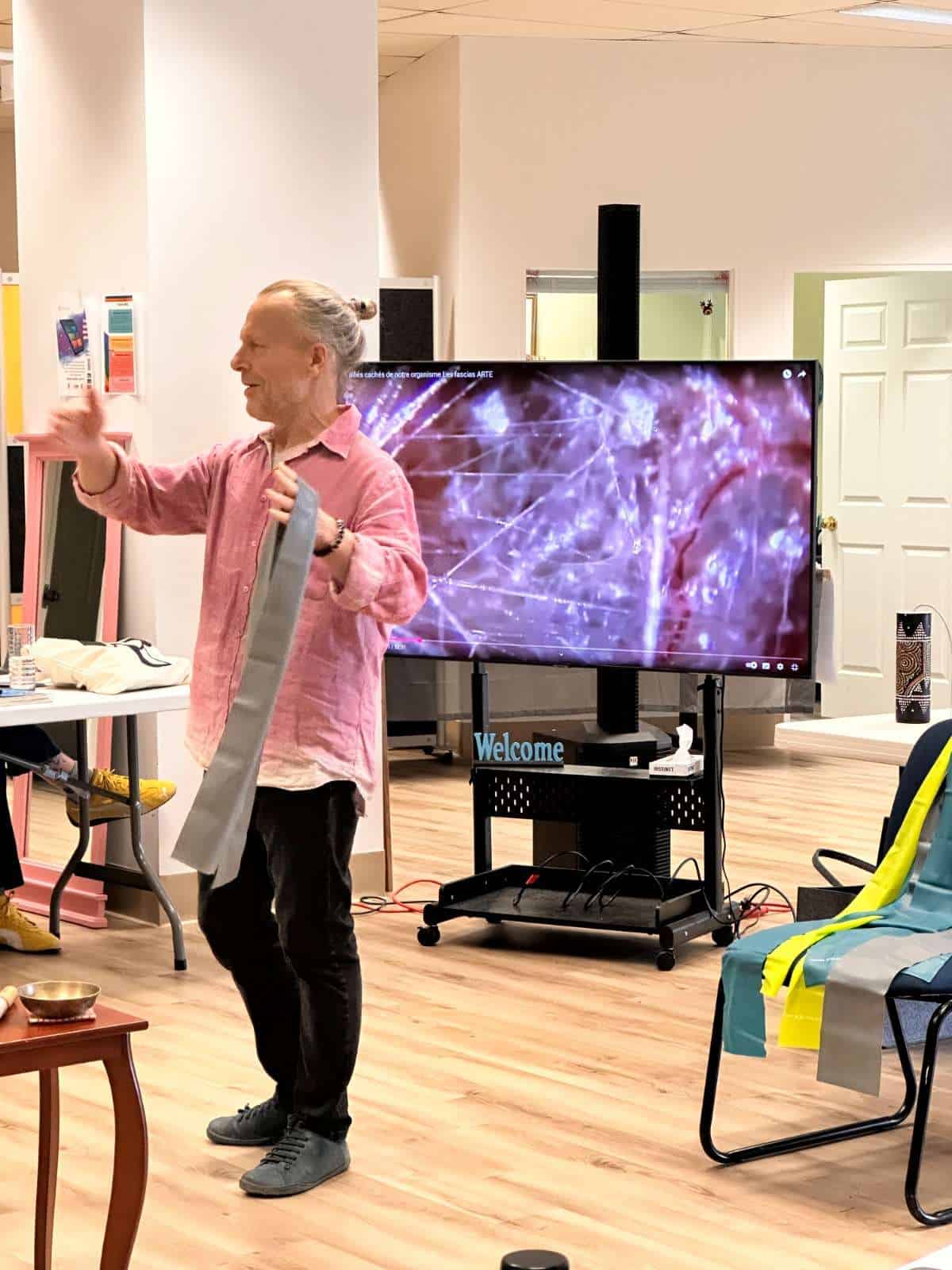
Co-led and taught by Jacques Humpich Poullard & Jean Humpich, Ph.D.
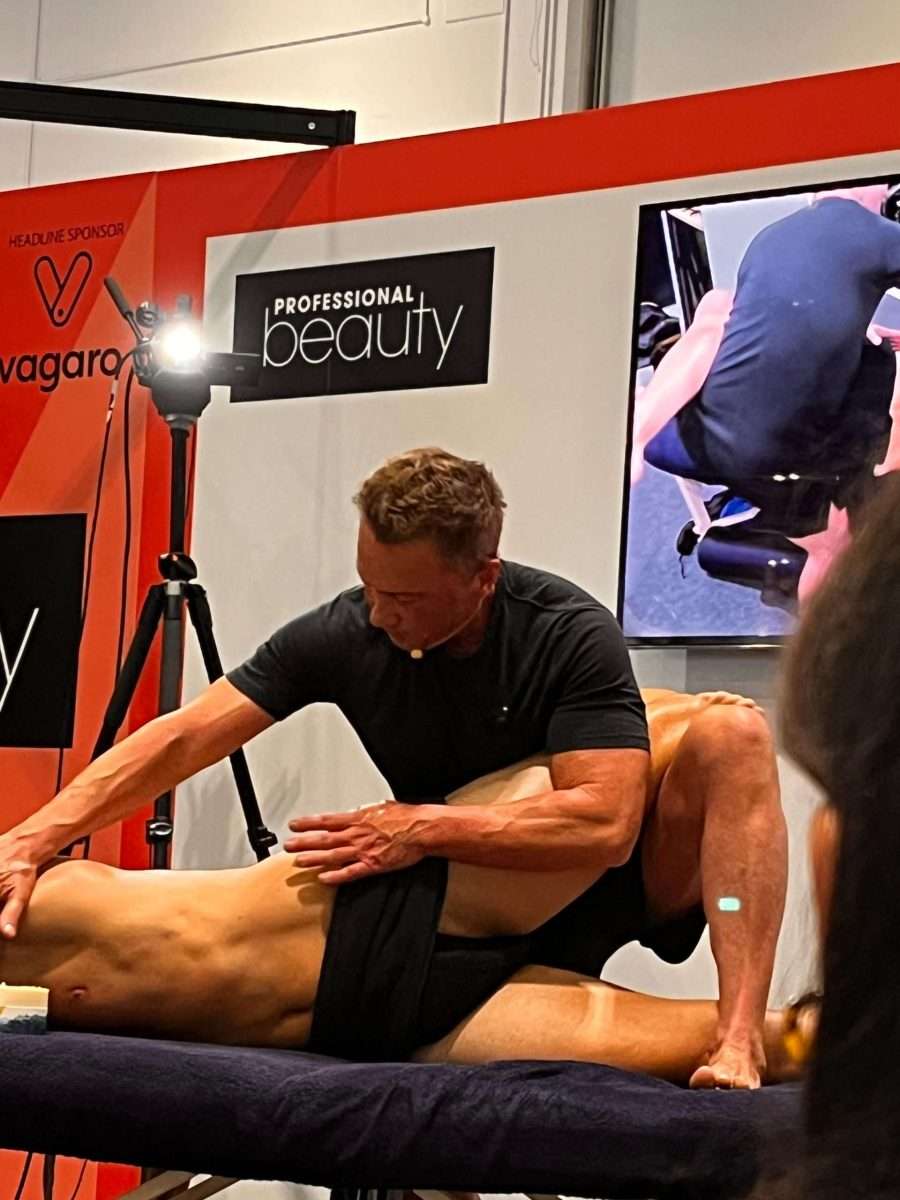
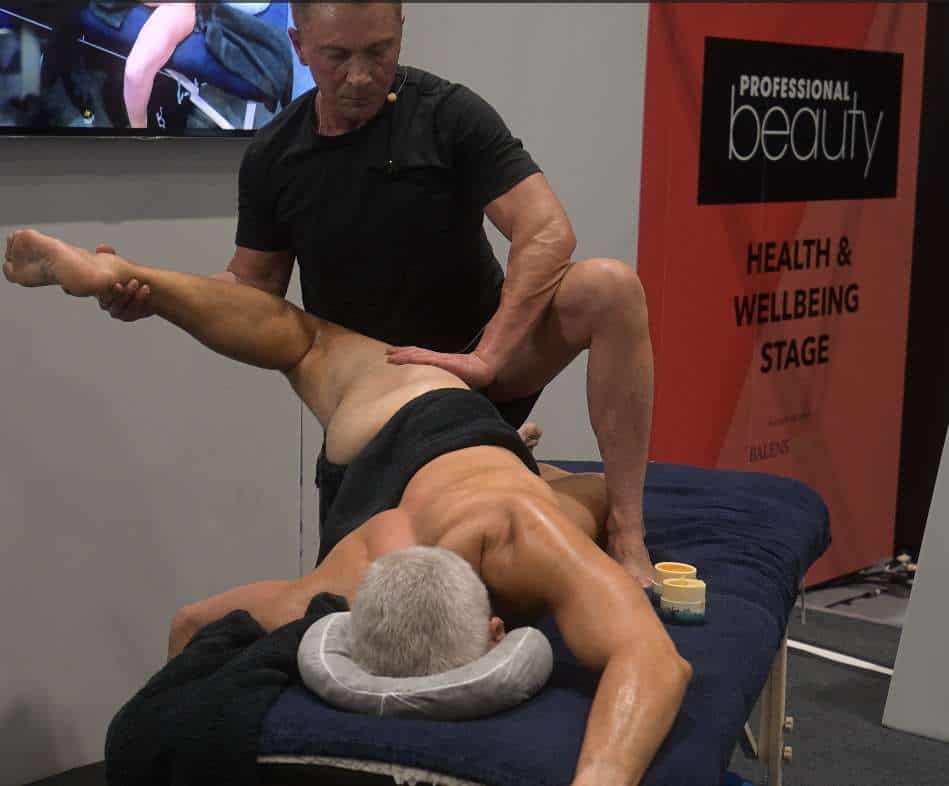
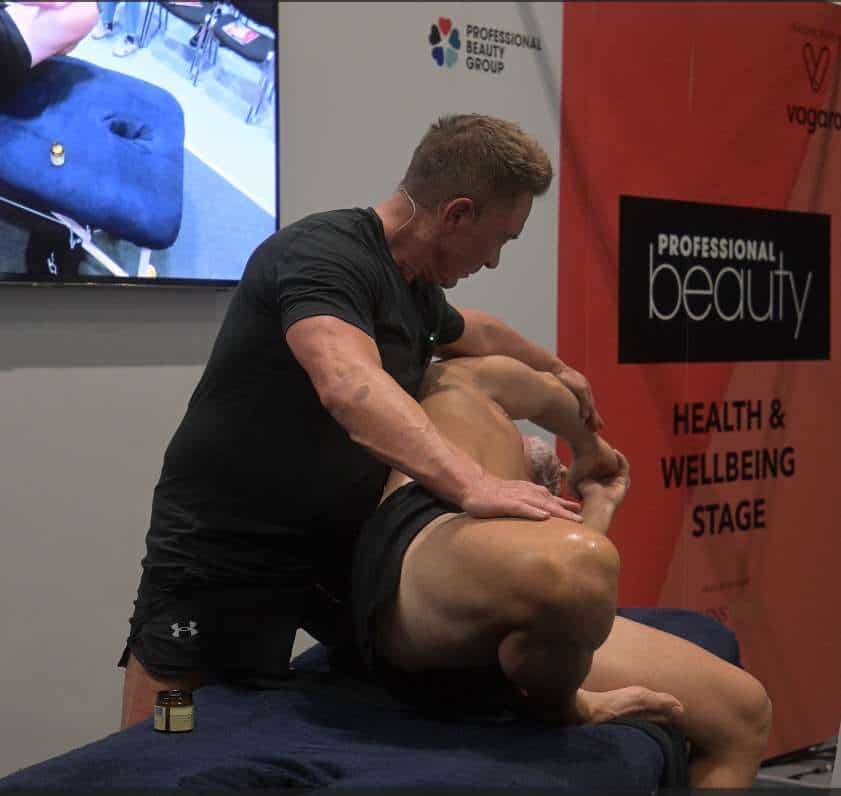
This workshop integrates the approaches developed by Jacques Humpich Poullard and Jean Humpich. It combines fascia-based manual therapy, movement integration, and practitioner awareness within a structured clinical framework, together with a West–Sports massage / East–Yoga approach for advanced bodywork.
The training is designed for practitioners seeking to develop a practice grounded in a global, adaptable, and coherent approach, based on the living body as a sensitive and interconnected system.
Structural Framework
The workshop is based on three interdependent dimensions:
- Fascia – Presence – Intelligence of the Living
Fascia is approached as:
a continuous structural network
a sensory and self-regulating system
a medium for force transmission and adaptation (bio-tensegrity)
The work aims to develop the practitioner’s quality of presence and their ability to engage with the body as a living, responsive system, rather than as a mechanical structure.
- Anatomy – Movement and Gesture – Dynamics of the Living
The body is understood as an integrated system in which:
structure, movement, and self-regulation continuously interact
local symptoms reflect global tension organisation patterns
function emerges from coordinated dynamics rather than isolated actions
- The Practitioner as a Regulating System
Clinical efficiency depends on:
the organisation of the practitioner’s body
the regulation of gesture, pressure, and rhythm
the coherence between intention, perception, and action
Clinical Orientation
The workshop develops a transition:
from local treatment → global pattern recognition
from mechanical application → adaptive interaction
from isolated techniques → coordinated whole-body intervention
Practitioners learn to:
assess global tension distribution
identify dominant and compensatory patterns
adapt intervention according to tissue behaviour
Manual therapy, movement, and nervous system regulation are integrated into a single clinical process.
Bio-tensegrity and Fascial Organisation
The body is approached as a bio-tensegrity system:
continuous tension (fascia, muscles)
discontinuous compression (bones)
multidirectional force distribution
Myofascial lines are used to interpret posture, movement, and compensation patterns, and to guide intervention strategies.
Sensory Touch and Deep Gesture
Manual work is based on:
controlled slowing of gesture → spontaneous tissue response
modulation of pressure, tension, and compression
continuous adaptation to tissue behaviour
This allows for:
greater precision and efficiency
reduced practitioner fatigue
stable autonomic regulation
Neurophysiological principles provide a framework, while clinical perception remains central.
Manual Therapy Approach
Techniques are applied based on tissue behaviour:
Soft Tissue Release (STR)
Connective Tissue Release (CTR)
directional fascial mobilisations
continuous fascial layer work
micro-adjustments of pressure and tone
Integrative sequences involving the five diaphragms connect local intervention to global regulation, linking pressure distribution, breathing, and internal coordination.
Movement Intelligence & Reintegration
Movement is used to consolidate manual work and create lasting change.
Key components:
breath-led integration
spiral and contralateral patterns
postural organisation and gait logic
Yoga-Inspired Postures as Clinical Tools
Yoga-inspired postures are used as fascial reorganisation tools, not passive stretching.
They:
reorganise tension patterns
integrate load through myofascial chains
stabilise structural adaptations
Movement reinforces new tissue behaviour under functional load.
Coordination and Sensitive Practitioner Ergonomics
Focus on practitioner organisation:
four functional “mobiles”
(midline axis, proximal, intermediate, distal)
coordination of hand, breath, and body axis
reduction of compensatory effort
This improves:
efficiency of gesture
clarity of force transmission
sustainability of practice
Development of Perceptual and Clinical Skills
The training develops:
refined palpation (density, elasticity, glide)
perception of fascial continuity and volume
real-time adaptation of gesture
synchronisation with tissue and breath dynamics
Practice becomes more coherent, less segmented, and more responsive.
Teaching Method
The workshop combines:
biomechanical and neurophysiological frameworks
guided practice
supervision
practice analysis
Learning is progressive and directly applicable.
Target Audience
Intermediate to advanced practitioners:
massage therapists and soft tissue practitioners
manual therapists
movement professionals in therapeutic contexts
Summary
This workshop offers a unified and clinically applicable approach integrating:
fascia as a living and regulatory system
practitioner presence and perceptual skill
bio-tensegrity principles
manual therapy and movement integration
yoga-inspired movement as a clinical tool
breath and multi-diaphragmatic coordination
The objective is to develop a coherent, adaptable, and efficient method for working with the body and from the body itself as a dynamic, reciprocal, and interconnected system.